Baby Fever: Causes, Symptoms, Home Care & Warning Signs
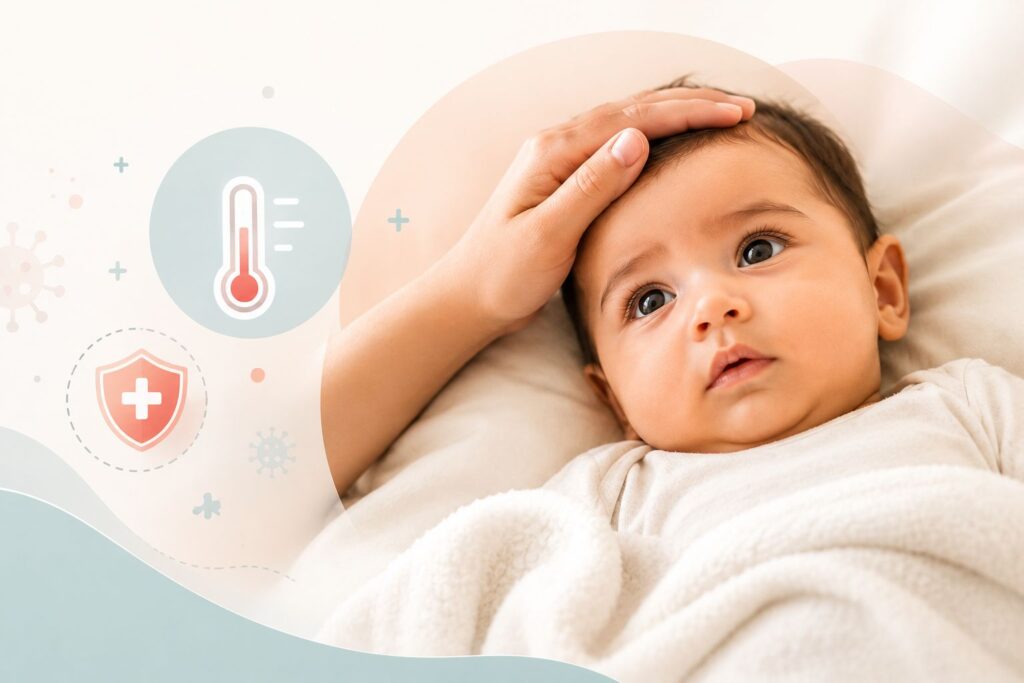
Few things worry parents more than feeling their baby’s forehead become warm. While fever can be frightening, it’s important to remember that fever itself is not an illness—it’s usually the body’s natural response to an infection.
In many cases, fever helps the immune system fight viruses and bacteria. However, the baby’s age, symptoms, and overall condition are more important than the thermometer reading alone.
This guide explains the causes of fever in babies, how to measure temperature correctly, home care tips, and warning signs that need immediate medical attention.
✅ Medically Reviewed By
Dr. Dad | Dr. Uday, MD Pediatrics
Last Reviewed: August 2026
Reading Time: 8 Minutes
What is Considered a Fever?
A baby’s normal body temperature usually ranges between 36.5°C and 37.5°C (97.7°F to 99.5°F).
A temperature of 38°C (100.4°F) or higher is generally considered a fever.
Remember that body temperature may vary slightly depending on:
- Time of day
- Physical activity
- Clothing
- Method used to measure temperature
Common Causes of Fever in Babies
Fever is usually caused by the body responding to an infection.
Some of the most common causes include:
Viral Infections
Most fevers in babies are caused by viral illnesses such as:
- Common cold
- Influenza (Flu)
- RSV (Respiratory Syncytial Virus)
- COVID-19
These infections usually improve with supportive care.
Ear Infection
Babies with ear infections may:
- Pull their ears
- Cry more than usual
- Have disturbed sleep
- Develop fever
Throat Infection
Older babies may refuse feeds because swallowing becomes painful.
Urinary Tract Infection (UTI)
Sometimes fever may be the only symptom of a urinary infection, especially in infants.
Gastrointestinal Infection
Vomiting, diarrhea, stomach pain and fever often occur together.
Vaccination
A mild fever after vaccination is common and usually settles within 24–48 hours.
Teething
Many parents believe teething causes fever.
Current medical evidence suggests that teething may slightly increase body temperature but does not usually cause a true fever (38°C or higher).
Symptoms of Fever
Apart from a high temperature, your baby may:
- Feel warm to touch
- Be more sleepy than usual
- Become irritable
- Cry excessively
- Feed less
- Sweat
- Shiver
- Breathe faster
- Become less active
Some babies continue playing normally despite fever, while others become uncomfortable even with mild fever.
Always observe your baby’s overall behaviour.
How to Measure Fever Correctly
A digital thermometer is the most reliable option.
Recommended methods
Newborn to 3 months
- Rectal thermometer (most accurate when used correctly)
3 months to 4 years
- Ear thermometer (if appropriate)
- Underarm thermometer
- Rectal thermometer when advised
Older children
- Oral thermometer
Avoid checking fever only by touching the forehead, as it is not accurate.
Home Care for Babies with Fever
If your baby is alert, feeding reasonably well and has no warning signs, you can usually care for them at home.
Keep Your Baby Hydrated
Offer:
- Breast milk
- Formula
- Water (only if age appropriate)
Small, frequent feeds help prevent dehydration.
Dress Comfortably
Avoid wrapping your baby in heavy blankets.
Dress them in light, comfortable clothing.
Allow Plenty of Rest
Sleep helps the body recover from infection.
Keep the Room Comfortable
Maintain a comfortable room temperature.
Avoid making the room too hot or too cold.
Give Medicines Only When Needed
If your pediatrician recommends fever medicine, use the correct dose according to your baby’s weight.
Never give:
- Aspirin
- Adult medicines
- Leftover antibiotics
without medical advice.
When Should You Visit a Doctor Immediately?
Seek urgent medical attention if your baby:
- Is younger than 3 months and has a temperature of 38°C (100.4°F) or higher
- Has difficulty breathing
- Refuses feeds repeatedly
- Is difficult to wake
- Has continuous vomiting
- Develops seizures
- Has blue lips or skin
- Has a rash that doesn’t fade when pressed
- Shows signs of dehydration
- Has fever lasting more than 48–72 hours or as advised by your healthcare provider
If you are ever worried about your baby’s condition, it is always safer to seek medical advice.
Can Teething Cause Fever?
This is one of the most common questions parents ask.
Research suggests that teething may cause:
- Mild irritability
- Increased drooling
- Desire to chew objects
- Slight increase in temperature
However, teething alone should not cause a high fever.
If your baby’s temperature is 38°C or above, look for another cause instead of assuming teething is responsible.
Common Mistakes Parents Should Avoid
❌ Giving antibiotics without a doctor’s prescription
❌ Using ice-cold baths
❌ Covering the baby with multiple blankets
❌ Measuring fever only by touching the forehead
❌ Giving adult medicines to children
❌ Delaying medical consultation despite warning signs
Frequently Asked Questions (FAQs)
Is fever dangerous?
Not always.
Fever is usually the body’s natural response to infection. What matters more is how your baby looks and behaves.
Should I wake my baby to give fever medicine?
If your baby is sleeping comfortably, follow your doctor’s advice. Fever medicine is mainly given to improve comfort rather than simply lower the temperature.
Can vaccination cause fever?
Yes.
A mild fever after vaccination is common and usually settles within one or two days.
Can fever cause seizures?
Some children between 6 months and 5 years may develop febrile seizures.
Although they can be frightening, most febrile seizures are brief. A child having a seizure should receive immediate medical evaluation.
Key Takeaways
- Fever is a symptom, not a disease.
- Most fevers are caused by viral infections.
- Keep your baby hydrated and comfortable.
- Babies younger than 3 months with fever should always be examined by a doctor.
- Watch your baby’s behaviour, feeding, breathing and hydration—not just the thermometer reading.
- Seek medical attention immediately if warning signs are present.
Medical Review
Medically Reviewed By
Dr. Dad | Dr. Uday, MD Pediatrics
Senior Pediatrician, DrDad
Last Reviewed: August 2026
Next Review Due: August 2027
About the Author
Written by: Dr Dad Editorial Team
This article has been prepared by the Dr Dad Editorial Team and medically reviewed by a qualified pediatrician to ensure the information is accurate, evidence-based, and parent-friendly.
Medical Disclaimer
This article is intended for educational purposes only and should not replace professional medical advice, diagnosis, or treatment. Every child is unique. If your baby has persistent fever, difficulty breathing, seizures, poor feeding, or any concerning symptoms, consult a qualified pediatrician or visit the nearest emergency medical facility immediately.
Suggested Internal Links
- Ear Infection in Babies: Symptoms & Treatment
- Cough & Cold in Children: Home Care Guide
- Child Vaccination Schedule by Age
- Dehydration in Children: Signs Every Parent Should Know
- Child Growth & Development Milestones
- Baby First Aid Guide
