
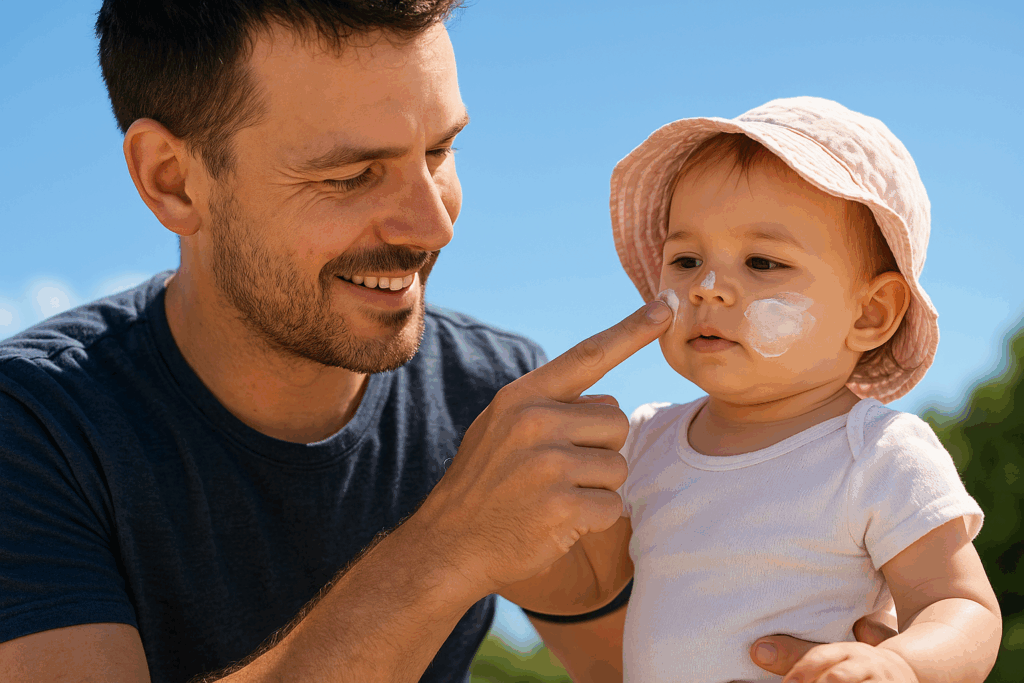
Sun Safety for Babies | How to Safely Apply Sunscreen on Infants : Full Explain
Why Sun Safety Is Crucial for Babies
Babies have very little melanin (the natural pigment that protects skin from UV rays). This means their skin can burn quickly and lead to:
- Painful sunburns within minutes of exposure.
- Increased risk of dehydration.
- Long-term skin issues, including higher chances of skin cancer later in life.
- Discomfort and disturbed sleep, which may affect feeding and routine.
According to pediatric dermatologists, protecting babies from direct sunlight during the first 6 months is critical. Even after 6 months, sunscreen should be used wisely along with other protective measures.
When Can You Apply Sunscreen on Babies?
One of the most common parenting questions is: At what age can I apply sunscreen on my baby?
- Under 6 months: Avoid sunscreen unless absolutely necessary. Instead, keep your baby in shade, dress them in lightweight long-sleeve clothing, and use wide-brimmed hats.
- 6 months and older: You can safely use baby-safe sunscreen (with SPF 30+ and broad-spectrum UVA/UVB protection).
👉 For younger babies, focus on environmental protection rather than creams. For instance, keep the room temperature cool and dress them appropriately. You can read more in our guide: What’s the Ideal Temperature for the Baby and What Should They Wear While Sleeping?
Choosing the Right Sunscreen for Infants
Not all sunscreens are safe for your baby’s delicate skin. Here’s what to look for:
- Mineral-based sunscreen: Look for zinc oxide or titanium dioxide as active ingredients. These sit on top of the skin and block UV rays, making them safer for sensitive skin.
- SPF 30 or higher: Enough to block around 97% of UVB rays. Higher SPF isn’t always necessary for infants.
- Fragrance-free and hypoallergenic: Avoid added perfumes, dyes, or chemicals that can irritate skin.
- Broad-spectrum protection: Shields against both UVA and UVB rays.
- Water-resistant formula: Helpful if your baby is sweating or near water.
Avoid: Sunscreens containing oxybenzone, parabens, or alcohol, which may cause irritation or allergic reactions.
How to Apply Sunscreen Safely on Babies
Here’s a step-by-step guide for parents:
- Do a patch test: Before full use, apply a tiny amount on your baby’s inner arm. Wait 24 hours to check for reactions.
- Apply 15–20 minutes before going out: This allows the sunscreen to settle on the skin.
- Use a pea-sized amount per area: For the face, a small pea-sized dot is enough. For the body, apply a thin, even layer.
- Cover exposed areas: Focus on face, ears, neck, hands, feet, and the back of the neck.
- Avoid sensitive areas: Do not apply on eyelids or near the mouth. Instead, use hats and protective clothing.
- Reapply every 2 hours: Or more often if your baby is sweating or splashing in water.
💡 Quick Tip for Parents: Babies often rub their faces with their hands. Use a stick sunscreen for the cheeks and nose to prevent stinging eyes.
Other Sun Safety Practices for Babies
Sunscreen alone isn’t enough. A holistic sun safety plan includes:
1. Shade is your best friend
- Use umbrellas, stroller shades, or trees for natural protection.
- Avoid direct sun exposure between 10 AM and 4 PM, when UV rays are strongest.
2. Dress them right
- Choose lightweight, long-sleeve cotton clothes.
- Use wide-brimmed hats to cover face, ears, and neck.
- Sunglasses with UV protection can shield sensitive eyes.
3. Keep your home baby-proofed for heat
Babies may also get indirect exposure through windows or while playing indoors. Alongside sun safety, make sure your home environment is safe from hazards. You can read more here: 9 Things You Should Be Careful While Baby-Proofing Your House.
4. Hydration matters
- Offer frequent breastfeeding or formula feeds.
- For older babies (6+ months), offer sips of water in hot weather.
Common Mistakes Parents Make with Sunscreen
Even well-meaning parents sometimes get sunscreen wrong. Avoid these mistakes:
- Using adult sunscreen on babies. The chemicals may be too harsh.
- Applying too little sunscreen – it reduces effectiveness.
- Skipping cloudy days – up to 80% of UV rays penetrate clouds.
- Forgetting small areas like ears, back of knees, or tops of feet.
- Relying only on sunscreen – remember shade and clothing are equally important.
Sun Safety for Babies During Outdoor Activities
At the Beach or Pool
- Reapply sunscreen every 40–80 minutes.
- Dress in UV-protective swimwear.
- Use shaded tents for playtime.
On Daily Walks
- Apply sunscreen on the face, arms, and feet if exposed.
- Keep stroller shades down but ensure proper ventilation.
At Home or in Cars
- Use UV-blocking window films.
- Don’t leave your baby in direct sunlight, even indoors.
Natural Alternatives & Home Remedies
Some parents prefer natural protection methods. While sunscreen is essential after 6 months, you can also use:
- Coconut oil or shea butter (for mild hydration, but not UV protection).
- Protective hats and long-sleeves as primary shields.
- Car shades and stroller covers for day-to-day sun avoidance.
⚠️ Note: Natural oils alone do not replace sunscreen. Always consult your pediatrician before skipping sunscreen in favor of home remedies.
Sun Safety and Nutrition: An Overlooked Factor
Did you know that diet also plays a role in protecting skin from the inside out?
- Antioxidant-rich foods like carrots, sweet potatoes, and leafy greens help reduce sun damage.
- Hydration keeps skin resilient against dryness and irritation.
For guidance on baby nutrition, see our article: Deciphering Baby Food Labels: A Parent’s Essential Guide.
Final Thoughts
Sun safety for babies is not just about sunscreen. It’s about creating a balanced routine with shade, protective clothing, hydration, and mindful sunscreen use. Remember:
- Avoid direct sun exposure for babies under 6 months.
- Use mineral-based sunscreen after 6 months.
- Combine sunscreen with hats, clothes, and shade for maximum protection.
- Keep your baby hydrated and comfortable during hot days.
With these tips, you can enjoy outdoor time with your little one without worrying about harmful sun damage.
Reference :- WHO.

Pingback: A Guide to Natural Baby Care & Healthy Habits for New Moms · Dr Dad